Exterior Stain Buying Guide for Lasting Results


A stain that looks great on the shelf can fail fast on a deck, fence, or wood siding if it is the wrong fit for the surface. That is why an exterior stain buying guide matters before you choose a color. The right product depends on wood type, weather exposure, previous coatings, and how much maintenance you are willing to take on later.
Exterior stain is not one category with one answer. Some products are built to show off wood grain. Others are designed to block UV damage, shed water, and even out older lumber that has already seen a few seasons. If you are buying for a home project, you want a finish that looks right and holds up. If you are buying for jobs, you need predictable coverage, solid adhesion, and a coating system you can stand behind.
What this exterior stain buying guide should help you decide
Most buying mistakes happen before application starts. Customers focus on color first, then realize too late that the opacity was wrong, the surface needed a different prep plan, or the product was meant for siding instead of horizontal foot traffic.
Start with the surface. A deck takes direct sun, pooled water, and abrasion from shoes, furniture, and snow removal. A fence has weather exposure but far less wear. Wood siding can face intense UV on one wall and deep shade on another. The same stain will not perform the same way in all three situations.
Then look at the condition of the wood. New lumber, pressure-treated boards, weathered cedar, and previously stained surfaces all absorb stain differently. That affects color, dry time, and longevity. It also affects whether you should use a transparent, semi-transparent, semi-solid, or solid stain.
Understand the main types of exterior stain
Transparent stain gives you the most natural look. It lets grain, knots, and color variation show through clearly. On premium wood, that can be exactly the point. The trade-off is lower hiding power and less UV protection than more heavily pigmented options. It usually needs more frequent maintenance, especially on horizontal surfaces in full sun.
Semi-transparent stain is often the safest middle ground. You still see the grain, but the added pigment improves color consistency and weather resistance. For many decks and fences, this is the balance point between appearance and service life.
Semi-solid stain adds more color coverage while keeping some texture and grain visibility. It works well when the wood has some age, mixed board tones, or minor visual flaws you want to soften without fully painting over the surface.
Solid stain gives the most uniform appearance and the strongest hiding power. It is a smart option when wood is older, patched, or visually inconsistent. It also offers strong UV protection because of the higher pigment level. The compromise is that it behaves more like a coating than a natural wood finish, and future maintenance often involves recoating rather than simply refreshing a lightly worn stain.
Oil-based vs. water-based exterior stain
This is one of the biggest decisions in any exterior stain buying guide because it affects application, dry time, cleanup, and long-term maintenance.
Oil-based stain penetrates deeply and is often favored for older, dry wood because it soaks in well and highlights grain with a rich look. It can be forgiving on rough lumber and tends to leave fewer lap marks during application. The downside is longer dry time, stronger odor, and solvent cleanup. In some climates and on some surfaces, it can also attract dirt more easily during curing.
Water-based stain has improved significantly and is now a strong choice for many exterior projects. It dries faster, cleans up with soap and water, and generally holds color well. It can be especially appealing for contractors trying to keep schedules tight or homeowners who want a cleaner application process. The trade-off is that it may raise wood grain slightly, and on very dry or porous lumber it can behave differently than expected without proper prep.
There is no universal winner. If you want faster turnaround and easier cleanup, water-based products are hard to ignore. If you are working with weathered wood and want deep penetration, oil-based formulas may still make more sense.
Match the stain to the wood and the age of the surface
New wood can be deceptive. Fresh lumber often looks ready to coat, but if it is pressure-treated, it may hold too much moisture for immediate staining. Applying stain too early can lead to poor absorption and premature failure. In many cases, the right move is to test moisture and wait until the wood is dry enough to accept the finish properly.
Cedar and redwood are attractive because of their natural character, but they still need protection from UV and moisture if you want to preserve that look. Transparent and semi-transparent stains are common choices here, though strong sun exposure may push some buyers toward more pigmented options for longer protection.
Older wood often benefits from a more forgiving stain category. If boards are grayed, patched, or uneven in tone, a semi-solid or solid stain can create a cleaner final result. This is often the practical decision on fences and siding where appearance matters as much as preservation.
Don’t choose color without thinking about opacity
Color cards can be misleading if you treat them like paint chips. With stain, the final appearance depends heavily on wood species, surface texture, moisture level, and how much product the wood absorbs. The same stain color can look noticeably different on pine, cedar, and pressure-treated lumber.
Opacity affects color almost as much as the tint itself. A transparent cedar tone will read completely differently from a solid cedar tone because one lets the base wood dominate and the other covers it more fully. If the project needs consistency across mixed boards or repairs, moving up in opacity often solves more problems than changing color.
For customers who care about exact visual control, testing is not optional. A sample area on the actual surface tells you more than any label can.
Surface prep decides how well the stain performs
Even the best stain will underperform on dirty, damp, or failing wood. Prep is not the glamorous part of the job, but it is where durability starts.
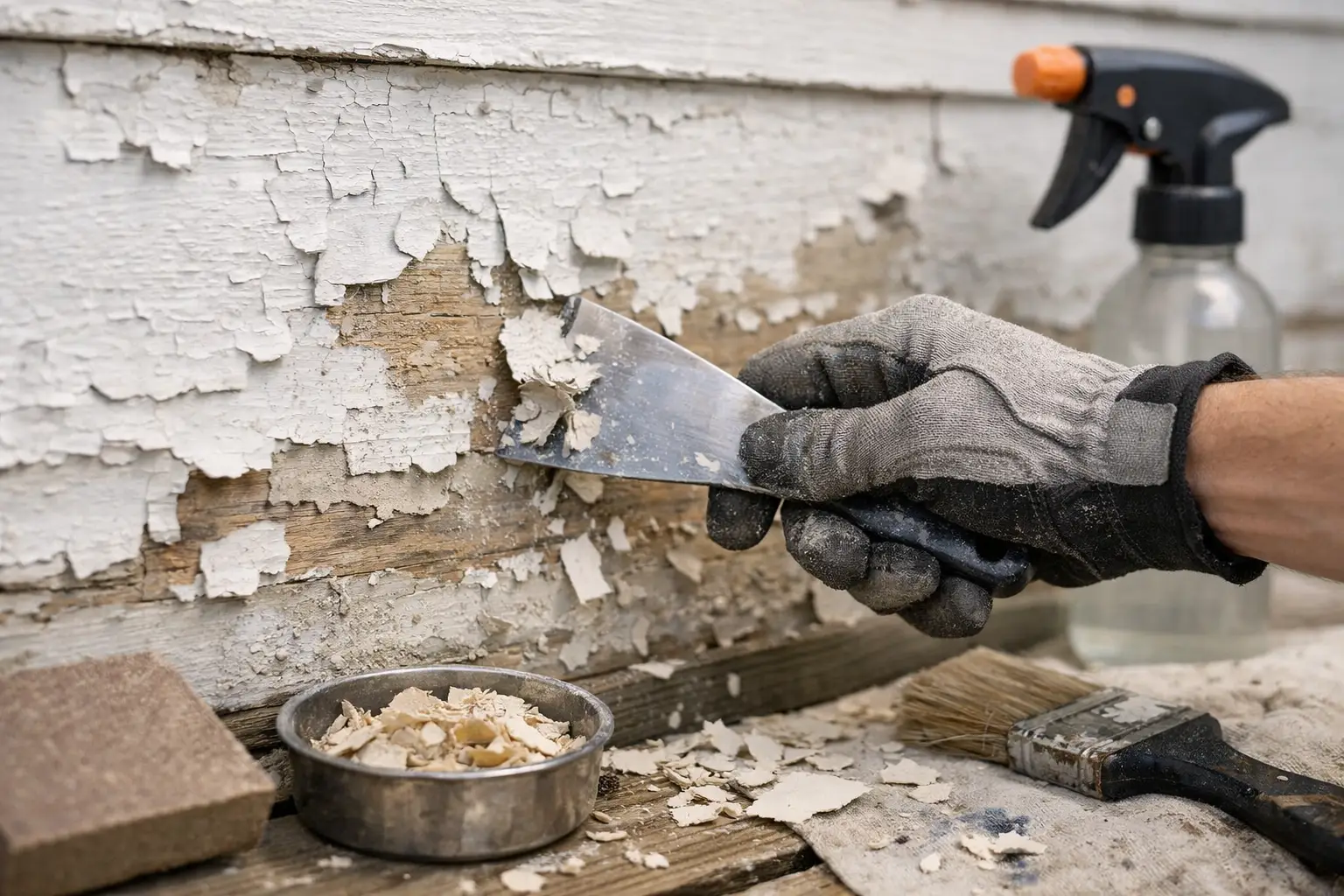
The surface should be clean, dry, and free of peeling coatings, dirt, mildew, and mill glaze. On decks, trapped grime and old finish residue can block penetration. On fences and siding, weathering and sun damage may need to be addressed before staining. Sanding may also be necessary, especially where wood fibers have lifted or previous coatings have left an uneven profile.
This matters for both DIY buyers and trade crews. Better prep means more even absorption, truer color, and fewer callbacks.
Think about maintenance before you buy
Some stains are easier to live with than others. Transparent and semi-transparent finishes usually wear away more naturally, which can make maintenance coats simpler. Solid stains often last longer visually but may show peeling or edge wear more clearly if the surface prep or product match was off.
That does not mean one is better. It means your choice should reflect how you plan to maintain the surface. If you are staining a rental property fence, ease and uniformity may matter most. If you are finishing a backyard cedar deck where natural character is the goal, you may accept more frequent upkeep for the look you want.
For pros, maintenance expectations should be part of the product decision from the start. Setting the right expectation now prevents disappointment later.
What to buy along with the stain
A good stain purchase usually includes more than the can. Cleaner, brightener, applicators, masking materials, sandpaper, and the right brushes or pads all affect the result. On larger jobs, coverage planning matters too. Running short midway through a wall or deck section can create color variation if a second batch is mixed later.
This is where a full-service supplier earns its keep. When you can source prep products, premium stain options, color guidance, and application tools in one order, the project moves faster and the finish is more consistent. For homeowners and contractors alike, that convenience saves real time.
Common buying mistakes to avoid
The most common mistake is buying based on color alone. Close behind that is choosing a stain without checking whether the surface was previously coated. Stain compatibility matters. Applying a penetrating product over a film-forming residue rarely ends well.
Another mistake is underestimating exposure. A covered porch and an uncovered deck may use similar wood, but they do not live in the same conditions. Full sun, standing water, snow, and foot traffic should push your decision toward stronger protection and realistic maintenance planning.
If you are unsure, ask better questions before purchase. What surface is being coated? How old is the wood? Has it been stained before? How much grain do you want to see? How often are you willing to recoat? Those answers usually narrow the field quickly.
A smart exterior stain purchase is less about finding the most expensive can and more about choosing the product that matches the surface, exposure, and finish you actually want. If you buy with that in mind, the project gets easier now and the next maintenance cycle gets easier too.