


Painting Newfoundland Saltbox Homes: Coastal Wind, Salt Air, and Iconic Colours

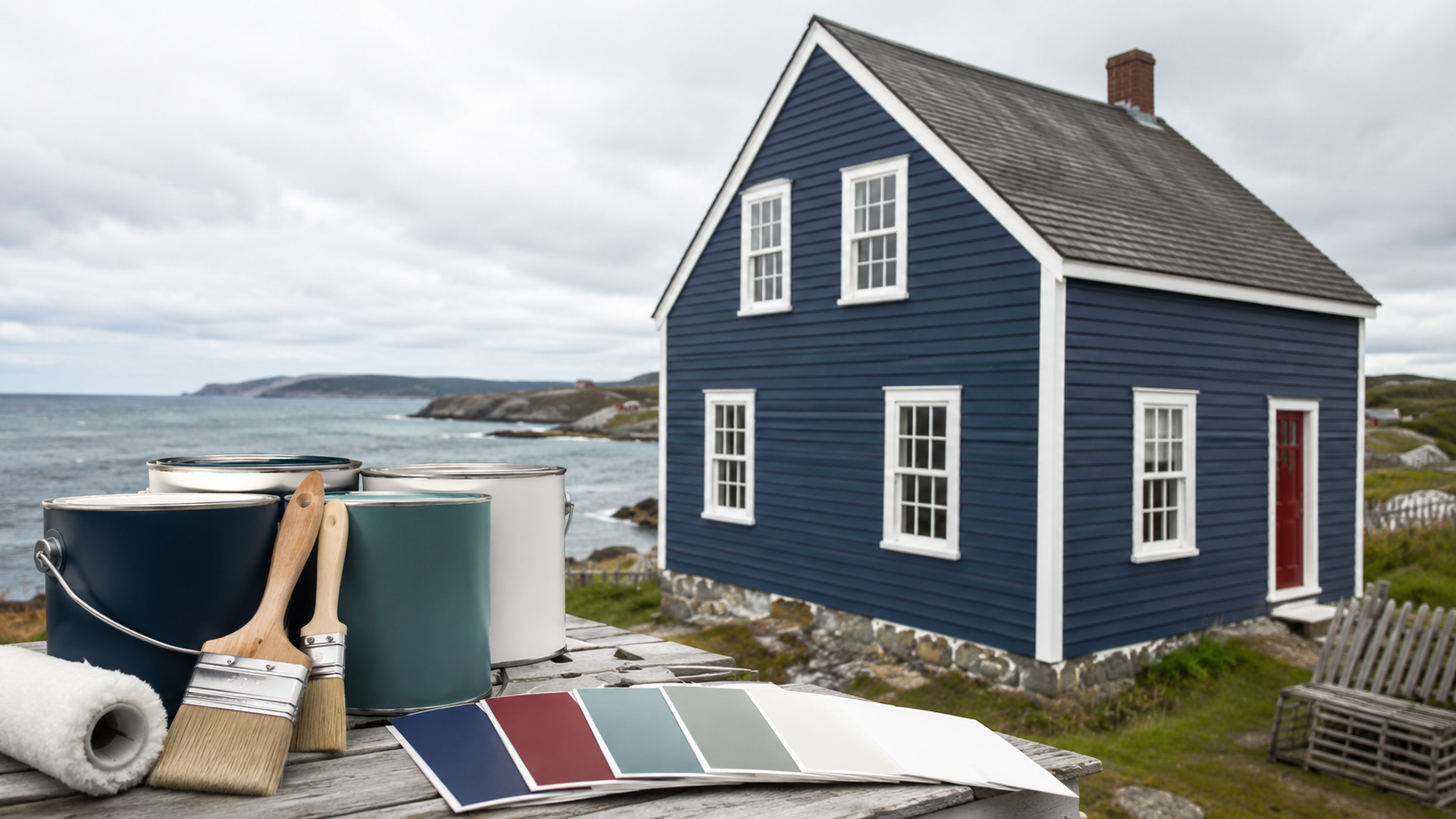
Newfoundland saltbox homes have a look you do not forget. The steep roofline. The simple shape. The wood siding. The bright colour against grey skies, fog, ocean wind, and rocky coastline.
But painting one is not the same as painting a house in a quiet inland suburb.
If you want to paint a Newfoundland saltbox coastal home, the real work starts before the colour goes on. Salt air, wind-driven rain, damp fog, bright summer sun, and winter freeze-thaw cycles can all affect how long your exterior paint lasts. A beautiful colour will only hold up if the surface underneath is clean, dry, repaired, primed, and ready.
That does not mean a coastal paint project has to feel intimidating. It just means you need a smarter plan.
This guide walks through how to inspect a Newfoundland saltbox exterior, wash away salt and mildew, deal with peeling paint, choose the right primer, pick durable exterior paint, and plan colours inspired by the region’s iconic coastal homes and Jellybean Row tradition.
Why Newfoundland Saltbox Homes Need a Coastal Painting Strategy
Newfoundland saltbox homes are part of the province’s architectural identity. The saltbox style is one of Newfoundland’s traditional folk house forms, known for its simple shape and sloped roofline. Heritage Newfoundland & Labrador explains that the name comes from the home’s resemblance to the boxes once used to ship salt to Newfoundland.
That history matters because many saltbox homes were built for practical coastal life. The form is simple, sturdy, and direct. But the exterior still takes a beating.
A Newfoundland coastal home may deal with:
- Salt carried through the air
- Wind-driven rain
- Frequent fog and dampness
- Strong UV exposure during clearer weather
- Winter freeze-thaw cycles
- Mildew or algae on shaded walls
- Peeling paint on wind-facing sides
- Moisture collecting around trim, windows, and lower siding
This is why exterior painting in coastal Newfoundland needs more than a quick wash and a fresh coat. The surface has to be prepared for the climate.
If you want a broader Canadian guide on how climate affects exterior paint selection, Oui Colour’s article on how to choose the right exterior paint for Toronto weather is a useful related resource.
What Salt Air and Coastal Wind Do to Exterior Paint
Salt air is one of the biggest challenges for coastal paint.
You may not always see it, but salt can leave a fine residue on siding, trim, doors, railings, fasteners, and hardware. When paint is applied over salt residue, it may not bond as well. Add wind and moisture, and the problem gets worse.
Wind does not just move air. On the coast, wind can drive rain into small cracks, under loose paint edges, around trim joints, and into tiny gaps between boards. Over time, that moisture can cause paint to blister, peel, crack, or lift.
Here are the common problems homeowners may notice:
- Peeling paint on exposed walls
- Blistering or bubbling paint
- Chalking, where old paint turns powdery
- Fading on sunny sides
- Mildew or algae in shaded areas
- Rust stains near nails, hinges, or metal fixtures
- Cracks around joints and trim
- Paint failure on board edges or window casings
A few terms are worth understanding.
Chalking means old paint has broken down into a powdery surface. If you rub your hand across the siding and see dust on your palm, the surface likely needs cleaning and possibly priming.
Blistering means the paint has formed bubbles. This can happen when moisture, heat, or poor adhesion affects the coating.
Adhesion simply means how well the paint sticks.
In coastal Newfoundland, paint failure is often a preparation issue before it is a paint issue. Even high-quality paint can fail if it is applied over salt, damp wood, mildew, loose paint, or chalky residue.
Inspect the Saltbox Before You Paint
Before buying paint, walk around the house slowly. Look at every side, not just the front.
The wind-facing side may be in much worse condition than the sheltered side. The lower siding may have more splashback damage. Trim around windows may have more cracks than the wide siding boards.
Use this checklist:
- Look for peeling or flaking paint.
- Check for soft or rotten wood.
- Inspect window trim and door frames.
- Look at the bottom courses of siding near the ground.
- Check under gutters and rooflines for water stains.
- Look for dark mildew or green algae.
- Check for chalky paint residue.
- Inspect caulking around joints.
- Look for rust stains near nails, screws, hinges, or fixtures.
- Check porch rails, steps, columns, and decorative trim.
Do not paint over rot. Paint may hide the problem for a short time, but it will not fix soft wood or trapped moisture. Rotten boards should be repaired or replaced before painting.
For peeling areas, Oui Colour’s guide on how to prep peeling paint can help you understand what needs to be scraped, sanded, and stabilized before fresh paint goes on.
Wash Away Salt, Dirt, and Mildew First
On a coastal home, washing is not optional.
Even if the siding looks clean from a distance, salt, dirt, mildew, and chalking can sit on the surface. If you paint over them, the new coating may stick to the residue instead of the house.
Start with a gentle exterior wash. Use a mild exterior cleaner and a soft or medium-stiff brush. Work from the top down, rinse well, and avoid forcing water behind the siding.
Pay extra attention to:
- Wind-facing walls
- Shaded sides of the home
- Areas under eaves
- Lower siding near the ground
- Porch railings and trim
- Window and door casings
If mildew is present, treat it with the appropriate cleaner before painting. Do not just paint over it. Mildew can come back through the surface and ruin the finish.
Be careful with pressure washing. Older wood siding and trim can be damaged by too much pressure. Water can also be pushed behind boards, which is exactly what you do not want before painting. If pressure washing is used, keep the pressure low, use a wide fan tip, and give the house plenty of time to dry.
On the coast, dry time matters. A wall can feel dry on the outside but still hold moisture in joints, seams, or shaded areas. Give the exterior a proper drying window before scraping, sanding, priming, or painting.
Scrape, Sand, and Feather Old Paint
Once the house is clean and dry, deal with loose paint.
Fresh paint should not be applied over flakes, curling edges, or failing coatings. It may look fine for a few weeks, but those weak areas can lift again once weather hits.
The basic process is:
- Scrape loose paint.
- Sand rough edges.
- Feather the transition between old paint and bare wood.
- Remove dust after sanding.
- Spot-prime bare areas.
Feathering simply means smoothing the edge where old paint meets exposed wood. You are not trying to make the wall look like drywall. You are just reducing hard ridges so the new paint lays more evenly.
Older homes need extra caution. If the house has very old coatings, there may be lead-based paint underneath. Do not aggressively sand unknown old paint without proper safety steps. If you are unsure, testing or professional help is the safer route.
Repair Wood, Gaps, and Caulking Before Painting
Paint is not a substitute for repair.
If there are damaged boards, soft trim, cracked caulking, or open joints, fix those first. Coastal rain and wind can push moisture into very small openings. Once water gets behind paint, even a good coating can fail.
Look closely at:
- Window sills
- Door frames
- Fascia boards
- Corner boards
- Porch trim
- Lower siding
- Areas around steps and railings
- Joints between trim and siding
Use exterior wood filler for small holes and dents. Replace rotten wood rather than trying to cover it. Use paintable exterior caulk where sealing is appropriate.
Be careful not to caulk areas that are meant to drain or breathe. Some siding systems need small gaps for moisture management. When in doubt, ask a professional before sealing every opening you see.
Choosing the Right Primer for Coastal Newfoundland Homes
Primer is one of the most important parts of a coastal paint job.
It helps paint stick, evens out porous areas, and improves the durability of the finish. On older wood siding, primer is often the difference between paint that lasts and paint that starts peeling too soon.
Use primer on:
- Bare wood
- Scraped areas
- Patched areas
- Weathered surfaces
- Stained areas
- Rust-stained areas after proper prep
- Chalky areas after cleaning
- Major colour changes
Different primer types do different jobs.
Exterior wood primer helps seal and prepare bare wood.
Bonding primer helps paint grip difficult or previously coated surfaces.
Stain-blocking primer helps stop stains from bleeding through.
Rust-inhibiting primer may be needed for properly prepared metal details, hardware, or railings.
If you are not sure which primer fits your project, this guide on how to choose exterior primer is a good place to start.
Best Exterior Paint for Salt Air, Wind, and Atlantic Winters
For a Newfoundland saltbox home, choose a high-quality exterior paint made for demanding weather.
The paint should be able to handle moisture, sun, temperature changes, and surface movement. Wood siding expands and contracts. Coastal wind pushes moisture into edges and joints. Winter adds freeze-thaw stress.
Look for exterior paint that offers:
- Strong adhesion
- Good flexibility
- UV resistance
- Mildew resistance
- Durability on wood siding and trim
- Compatibility with the primer you are using
- Suitability for Canadian weather conditions
This is not the place to choose paint based only on price. A cheaper product may look good at first, but coastal exposure can shorten its life quickly. Better prep and better paint usually cost less than repainting too soon.
For cold-weather performance, Oui Colour’s guide to the best exterior paint for Canadian winters is a strong related resource.
You can also browse exterior coating options through the exterior paint category.
The Jellybean Row Colour Tradition
A Newfoundland exterior paint guide would feel incomplete without talking about colour.
The colourful homes of St. John’s are part of what many people picture when they think of Newfoundland. Newfoundland and Labrador Tourism describes the colourful downtown St. John’s houses as Jellybean Row, tied to the local heritage palette.
That does not mean every saltbox home needs to look like a postcard. But it does mean colour can feel very natural in this region.
For a Newfoundland saltbox home, colour is not just decoration. It can help the home feel connected to place.
Popular coastal-inspired colour directions include:
- Deep ocean blue
- Foggy teal
- Cranberry red
- Mustard yellow
- Soft butter yellow
- Heritage green
- Warm white with bold trim
- Blue-grey with a red door
- Cream with green trim
- Charcoal with a bright front door
- Soft coastal blue with white trim
The best colour depends on the house, the setting, the neighbouring homes, and how bold you want to be.
A small saltbox near the water may look beautiful in a saturated blue or red. A larger home may feel better in a softer body colour with bold trim or a colourful door.
Choosing Colours That Work in Fog, Wind, and Grey Light
Coastal light changes everything.
A colour that looks warm and balanced in a paint store may look cooler outside under grey skies. A soft blue may look brighter in fog. A cream may look more yellow in direct sun. A dark green may look almost black on a cloudy day.
That is why exterior colour testing matters.
Before choosing the full house colour:
- Paint large sample boards.
- View them outside.
- Check them in cloudy weather.
- Check them in bright sun.
- Look at them in morning and evening light.
- Test colours on different sides of the home.
- Compare siding, trim, and door colours together.
Bright colours can look cheerful against Newfoundland fog and rock. Whites and neutrals can look classic, but they often need warmth so they do not feel stark. Dark colours can look dramatic, but they may show fading more clearly over time.
If you love a bold Jellybean Row-inspired colour but feel nervous, use it on the front door first. It is easier to repaint a door than an entire house.
Front Doors, Trim, and Accent Colours
The front door is one of the easiest places to add personality.
On a saltbox home, the main siding colour sets the mood, but the door and trim create the character. A deep blue house with white trim feels crisp and coastal. A cream house with green trim feels classic. A grey house with a red door feels modern but still rooted in tradition.
Good front door colours for coastal homes include:
- Red
- Navy
- Teal
- Forest green
- Mustard yellow
- Black
- Cranberry
- Deep turquoise
Trim needs durability because it often gets hit hardest by wind, rain, and sun. Doors also take a lot of wear from hands, weather, and hardware. Use paint suited for doors and trim, not just leftover wall paint.
For more guidance, read Oui Colour’s article on the best paint for front doors.
Best Time to Paint a Newfoundland Coastal Home
The best time to paint is not just about the calendar. It is about the weather window.
Late spring through early fall is usually more practical, but coastal conditions can still be unpredictable. A warm day does not help much if the siding is damp, fog rolls in, or wind is blowing dust and salt across the surface.
Before painting, check:
- Rain forecast
- Wind speed
- Overnight temperatures
- Humidity
- Fog conditions
- Surface dryness
- Product label requirements
Avoid painting right before rain. Avoid painting damp siding. Avoid painting in heavy wind. Also avoid painting a wall that is too hot from direct sun.
On the coast, “dry enough” matters more than “warm enough.” Paint needs the right temperature, but it also needs a dry, stable surface.
Tools and Materials Checklist
A coastal exterior paint project needs more than a brush and a can of paint.
Helpful supplies include:
- Exterior cleaner
- Stiff nylon brush
- Scraper
- Sanding sponge or sandpaper
- Drop cloths
- Painter’s tape
- Exterior wood filler
- Paintable exterior caulk
- Exterior primer
- Exterior paint
- Angled brush
- Roller and tray
- Extension pole
- Ladder or scaffold, if needed
- Gloves
- Safety glasses
- Dust mask or respirator for sanding old coatings
For brushes, rollers, tape, trays, and other basics, you can check Oui Colour’s paint supplies and tools page.
Step-by-Step Plan for Painting a Newfoundland Saltbox Exterior
Painting a coastal saltbox home takes patience. The process is not complicated, but each step matters.
Check the Weather Window
Start by choosing several dry days in a row.
Look at both daytime and nighttime conditions. If the temperature drops too low overnight, drying and curing may be affected. If rain or fog is expected, wait. If the wind is strong, wait.
Painting in poor conditions is one of the easiest ways to shorten the life of the finish.
Wash the Exterior
Wash the siding, trim, doors, and porch details to remove salt, mildew, dirt, and chalky residue.
Rinse well. Cleaner residue can also affect paint adhesion, so do not leave it behind.
Let the house dry fully before moving to the next step.
Scrape and Sand Loose Paint
Remove loose or flaking paint. Do not force off paint that is still firmly attached, but do remove anything that is already failing.
Sand rough edges so the surface transitions more smoothly. If old paint may contain lead, follow safety guidance or hire a professional.
Repair Damaged Areas
Fix wood damage before painting.
Replace rotten wood. Fill small holes. Repair loose trim. Re-caulk joints where needed. Let all repairs cure before priming.
This step can feel slow, but it is what keeps the paint from failing at the same weak points again.
Prime Bare and Problem Areas
Prime all bare wood, patched areas, scraped spots, stains, and weathered sections. If the whole surface is uneven or chalky, a full primer coat may be needed.
Use the right primer for the surface. Bare wood, stains, metal details, and glossy old coatings may need different primer choices.
Paint Trim and Edges
Use a brush to cut in around windows, doors, corners, trim, and detailed areas.
Saltbox homes often have simple lines, but trim still matters. Clean edges can make the whole paint job look more polished.
Paint the Siding
Paint in manageable sections. Follow the direction of the siding. Avoid painting in strong wind or direct harsh sun.
Apply even coats. Do not stretch the paint too thin, especially on weathered wood. Follow the product label for coverage and recoat times.
Most exteriors benefit from two coats, especially when changing colour or painting over a weathered surface.
Let the Paint Cure Properly
Paint can be dry to the touch before it is fully cured.
Avoid washing the surface, pressing ladders against it, or reinstalling hardware too aggressively until the coating has had proper time to cure. Follow the product label for guidance.
Maintenance Tips for Coastal Paint Longevity
A coastal paint job needs maintenance. That does not mean repainting every year. It means catching small issues before they become large ones.
Helpful maintenance habits include:
- Rinse salt residue from exposed areas when needed.
- Inspect paint every spring.
- Touch up chips early.
- Keep gutters and downspouts working.
- Trim shrubs away from siding.
- Watch shaded walls for mildew.
- Re-caulk failing joints before water gets behind siding.
- Check wind-facing trim more often.
- Keep front doors and porch details maintained.
A little maintenance can extend the life of the finish. Oui Colour’s guide on protecting your home exterior paint and stain offers related advice for keeping exterior finishes in better shape.
Special Note for Heritage or Registered Homes
Some Newfoundland saltbox homes may have heritage value.
If your home is registered, located in a heritage area, or part of a historically significant streetscape, check before making major exterior changes. There may be rules or recommendations around colour, siding, windows, trim, and materials.
This is especially important if you are changing from a traditional colour to something bold, replacing wood siding, altering trim profiles, or restoring original features.
Heritage NL works to protect, promote, and preserve Newfoundland and Labrador’s built and intangible heritage, so it is a helpful reference point for homeowners dealing with historically important properties.
When in doubt, ask first. A quick check can prevent expensive corrections later.
Common Mistakes to Avoid
The biggest mistakes usually happen before the first coat goes on.
Avoid these:
- Painting over salt residue
- Painting damp wood
- Skipping primer on bare wood
- Ignoring peeling paint
- Painting during heavy wind
- Using interior paint outside
- Choosing colour without testing it outdoors
- Forgetting trim and door durability
- Caulking areas that need drainage
- Ignoring rot or water damage
- Underestimating coastal maintenance
- Painting too close to rain or foggy weather
- Using leftover paint that is not suited to the surface
A coastal home is less forgiving than an inland one. If the surface is not clean, dry, and stable, the paint will show it.
When to Call a Professional
A careful DIY homeowner can handle many exterior painting tasks, especially on a small, accessible home. But some projects are better left to a professional.
Consider hiring help if:
- The home is tall or difficult to access.
- Paint is peeling across large areas.
- There may be lead paint.
- Wood rot is present.
- The house has heritage restrictions.
- You want a major colour change.
- Wind-facing walls need extensive repair.
- Trim, windows, and doors need restoration.
- You are unsure which primer system to use.
A professional can also help identify whether the problem is actually paint failure, moisture intrusion, wood rot, or poor drainage.
Why Trust Us
Oui Colour helps Canadian homeowners choose paint, primers, stains, tools, and prep products for real Canadian conditions.
This guide focuses on the full painting system, not just the final colour. For Newfoundland saltbox homes, that system includes inspection, salt removal, surface repair, primer selection, exterior paint choice, colour testing, and ongoing maintenance.
That matters because coastal painting is not only about making a house look beautiful. It is about helping the finish stand up to wind, salt air, moisture, and Canadian weather.
Related FAQs
What is the best paint for a Newfoundland saltbox home?
Use a high-quality exterior paint suited for wood siding, moisture, UV exposure, and Canadian freeze-thaw conditions. The best paint will still need proper washing, repair, and primer underneath.
How often should you repaint a coastal saltbox house?
It depends on exposure, paint quality, prep, and maintenance. Wind-facing and ocean-facing sides may need touch-ups sooner than sheltered walls. Regular inspection helps you catch small failures early.
Can I use bright Jellybean Row-style colours on my home?
Yes, but test colours outdoors first. Bold colours can look different in fog, rain, and grey coastal light. If your home is in a heritage area, check local requirements before making a major colour change.
Do I need to wash salt off before painting?
Yes. Salt residue can interfere with paint adhesion. Wash, rinse, and let the siding dry fully before scraping, priming, or painting.
Should I prime before painting coastal wood siding?
Yes, at least on bare wood, scraped areas, patched areas, stains, and weathered surfaces. Primer helps paint bond and improves the overall durability of the finish.
What is the biggest mistake when painting coastal homes?
Painting before the surface is clean and dry. Salt, dampness, mildew, and loose paint can all cause premature paint failure.
Can I paint a Newfoundland saltbox home myself?
Yes, if the home is safe to access and the surface is in good condition. If there is rot, heavy peeling, lead-paint risk, or heritage restrictions, professional help is safer.
What colours look best on coastal saltbox homes?
Classic options include deep blue, red, yellow, green, cream, white, grey-blue, and teal. The best choice depends on the home’s setting, trim, roof colour, neighbouring houses, and how bold you want the final look to feel.
Final Thoughts
Painting a Newfoundland saltbox home is about more than choosing a pretty colour. Coastal wind, salt air, damp fog, rain, sun, and winter weather all affect how the finish performs.
To paint a Newfoundland saltbox coastal home well, start with the basics: wash away salt and dirt, let the siding dry, scrape loose paint, repair damaged wood, use the right primer, and choose a high-quality exterior paint made for Canadian conditions.
Then comes the fun part: colour.
Whether you choose a soft heritage shade, a crisp white with bold trim, or a cheerful Jellybean Row-inspired palette, the best results come from balancing tradition with durability. A saltbox home should look beautiful, yes. But on the Newfoundland coast, it also needs a paint job that can stand up to the weather.
