


Air Quality Bylaws and Painting Permits: When Toronto, Montréal, and Vancouver Restrict Exterior Painting

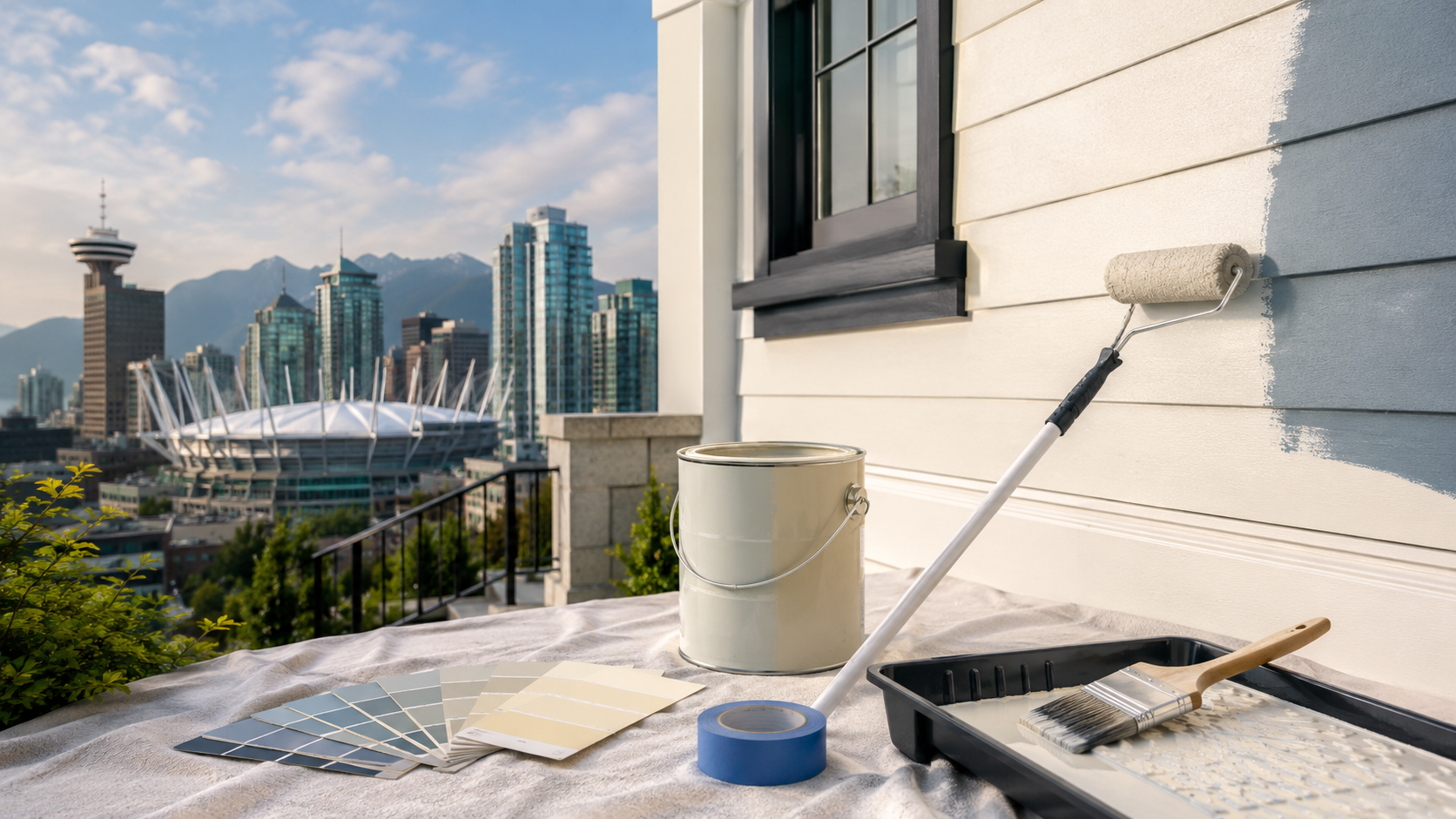
Exterior painting feels like one of those home projects that should be simple. Pick a colour, buy the paint, prep the surface, and get started. And in many cases, a basic repaint really is straightforward.
But in major Canadian cities, the rules around exterior painting can get more complicated than homeowners expect. A project may not need a traditional building permit, but it can still run into municipal bylaws, condo rules, heritage restrictions, noise limits, neighbour complaints, spray-paint concerns, air-quality rules, or public-property permits.
That is where many homeowners and small contractors get caught off guard. The issue is not always “Can I paint my house?” It is often “Can I spray near a neighbour’s car?” “Can I paint this balcony railing?” “Can I set up scaffolding on the sidewalk?” or “Can I use noisy prep equipment on Saturday morning?”
This guide explains the practical side of painting bylaw permit Toronto Vancouver rules, with Montréal included because exterior renovation and borough rules are especially important there. Before choosing products, homeowners can also review Oui Colour Paint’s guide on how to choose the right exterior paint for Toronto weather to understand why climate, surface condition, and coating type matter.
Why Exterior Painting Can Trigger City Rules
A simple brush-and-roller repaint on your own detached home is usually very different from a full exterior renovation, a spray-painting project, or work on a condo balcony. The more your project affects other people, public space, building appearance, or air quality, the more likely rules may apply.
Exterior painting can trigger questions around:
- Building permits
- Heritage approvals
- Condo or strata rules
- Construction noise
- Spray drift and overspray
- Odour complaints
- Neighbour access
- Public sidewalk or laneway occupation
- Waste disposal
- Product VOC limits
A building permit usually deals with construction, demolition, major renovations, structural changes, and certain exterior alterations. A municipal bylaw may deal with noise, nuisance, property standards, sidewalk use, or public safety. A product regulation may control what types of coatings can be manufactured, imported, sold, or used.
Here is a simple breakdown:
| Rule Type | What It Usually Controls | Painting Example |
|---|---|---|
| Building permit | Construction or major alteration | Replacing siding while repainting |
| Municipal bylaw | Noise, nuisance, public property, safety | Sanding outside allowed hours |
| Condo or strata rule | Shared property and exterior appearance | Painting balcony railings |
| Heritage approval | Protected features or visible façade changes | Repainting a designated heritage exterior |
| Environmental regulation | VOC limits, emissions, contamination | Coating products and spray applications |
Canada also regulates VOC concentration limits for many architectural coating categories through the federal VOC Concentration Limits for Architectural Coatings Regulations. VOCs, or volatile organic compounds, are chemicals that can evaporate into the air from certain paints, coatings, solvents, and related products.
Toronto Exterior Painting Rules to Check
When Toronto May Care About Your Paint Project
For a basic like-for-like exterior repaint, Toronto homeowners are not usually dealing with the same permit process as someone building an addition or replacing a structural component. But once painting overlaps with renovation work, public property, heritage features, side-yard access, or contractor equipment, it is worth checking first.
The City of Toronto’s Building Permits page is the place to start when a project involves construction, demolition, additions, or major renovations.
You should take a closer look if your painting project includes:
- Replacing siding instead of only repainting it
- Repairing or altering porches, stairs, decks, or railings
- Changing exterior features visible from the street
- Working on a heritage property
- Using scaffolding, lifts, or equipment near a sidewalk
- Painting a condo exterior feature
- Accessing a neighbour’s property to reach a side wall
- Blocking a lane, boulevard, or public walkway
For seasonal timing, Oui Colour Paint’s guide on key steps to repainting your exterior before Toronto winter is also useful because many exterior painting issues come from rushed prep, poor timing, or damp surfaces.
Toronto Noise and Work-Hour Issues
Painting itself may be quiet, but prep work is not always quiet. Pressure washing, sanding, scraping, using compressors, moving ladders, loading materials, or setting up a lift can create noise.
Before scheduling exterior prep, check Toronto’s Noise information. This matters more for contractors, but homeowners should care too. A neighbour complaint can slow down a project quickly, especially in dense areas with semi-detached homes, townhomes, and narrow lots.
A practical rule: if the work involves noisy equipment, treat it like construction prep, not just “painting.”
Toronto Neighbour Access for Side-Wall Painting
Many Toronto homes are close together. Sometimes the only practical way to paint one side of a house is from the neighbour’s yard.
Toronto has guidance on Right to Enter Neighbour’s Land for Repairs. This is especially relevant for side-wall repairs, exterior painting, caulking, and maintenance where access from your own property is not possible.
Even where legal access may be allowed, communication still matters. Give proper notice, explain the work, protect the neighbour’s property, and avoid storing materials on their land unless you have clear permission.
Montréal Exterior Painting Rules to Check
Montréal Rules Often Depend on the Borough
Montréal is a city where homeowners need to pay close attention to borough rules. A basic exterior repaint may be treated differently from replacing siding, changing façade materials, painting a mural, or working in an area with architectural review.
Montréal’s page on repairing or replacing exterior siding explains that a permit is not required to maintain, paint, or repair exterior wall siding such as brick, parging, or wooden clapboard, as long as the work does not use a different siding material. But if you are replacing materials, adding siding, or changing the exterior in a larger way, the answer can change.
That is the big lesson for homeowners: painting may be maintenance, but exterior renovation is a different category.
Murals, Façades, and Architectural Review
Montréal also has specific rules for certain visible exterior work. For example, the city says you need borough authorization to paint a mural on a private building.
Some projects may also be subject to a Site Planning and Architectural Integration Program, especially when they affect a visible façade or an area with special architectural standards. Homeowners planning more than a basic repaint should review Montréal’s page on projects subject to site planning and architectural integration review.
In plain English: repainting siding the same way is one thing. Changing the visual character of a façade, adding a mural, or altering materials is another.
Montréal Noise Rules Vary by Borough
Montréal’s Noise information explains that noise by-laws fall under borough jurisdiction. That means homeowners and contractors should not assume one universal citywide work schedule applies everywhere.
Before sanding, pressure washing, using compressors, or scheduling a crew, check the borough rules. Montréal’s page on construction noise complaints is a helpful starting point because it directs residents to borough-specific regulations.
Vancouver Exterior Painting Rules to Check
Vancouver Is Clear That Basic Painting Usually Does Not Need a Permit
Vancouver is helpful here because the city’s When you need a permit page specifically lists painting among projects that do not require a permit.
That is good news for homeowners doing a straightforward repaint. But the same page also makes clear that permits are required for many types of construction and renovation work. So the question is not only “Am I painting?” It is “Am I also changing the building?”
You should check further if the project involves:
- Structural repairs
- Deck alterations
- Exterior envelope work
- Fire separation repairs in multi-unit buildings
- Moving walls, plumbing, electrical, or gas lines
- Major exterior renovation
- Heritage considerations
- Public property occupation
If it is just painting, the permit answer may be simple. If it is painting plus renovation, do not guess.
Vancouver Noise and Equipment Rules
Vancouver’s Noise Control By-law is important for exterior painting projects that involve prep equipment. Construction-related noise has specific permitted hours, and work outside those hours may require an exception permit.
This matters if your painting project includes:
- Pressure washing
- Power sanding
- Scraping with loud tools
- Compressor use
- Lift equipment
- Contractor setup
- Work on streets, lanes, or boulevards
Again, the paint roller may not be the problem. The prep equipment might be.
Vancouver Air Quality and Spray-Coating Concerns
Typical residential brush-and-roll painting is not the same as commercial spray coating, but spray application still deserves care. Overspray can travel, especially on windy days, and dense urban lots leave little margin for error.
For commercial or spray-heavy coating work, contractors should review Metro Vancouver air-quality materials, including the automotive refinishing emission regulation, and confirm whether their activity needs additional controls.
For homeowners, the practical takeaway is simpler: if you are spraying outdoors, think about where the mist goes.
Spray Painting, Overspray, and Odour Complaints
Spray painting is where many exterior projects become risky. Not always illegal. Not always permit-heavy. But risky.
Overspray can land on:
- Cars
- Windows
- Fences
- Decks
- Patio furniture
- Neighbouring siding
- Plants
- Sidewalks
- Brickwork
- Outdoor lighting
- Railings
Wind can carry fine paint droplets farther than expected. Even a light breeze can turn a controlled spray job into a neighbour dispute.
If you are using spray equipment, plan for:
- Calm weather
- Proper masking
- Drop cloths
- Wind checks
- Neighbour communication
- Vehicle protection
- Window and trim protection
- Careful cleanup
- Product label compliance
Brush and roller application may be slower, but it is often easier to control in tight urban areas. For many homeowners, especially in Toronto semis or Vancouver lots with close neighbours, control is worth more than speed.
Surface prep also matters. If old paint is failing, start with Oui Colour Paint’s guide on how to prep peeling paint. If bare areas need sealing, review how to choose exterior primer before applying the topcoat.
Low-VOC and Product Selection for Exterior Painting
Low-VOC products are often discussed for interior painting, but product selection matters outdoors too. Exterior paint still needs to be appropriate for the surface, climate, and application method.
For dense neighbourhoods, low-odour and lower-VOC options may help reduce complaints, especially when homes are close together or windows are open in summer. Health Canada’s page on volatile organic compounds is useful for understanding VOC exposure in general.
When choosing exterior paint, consider:
- Surface type
- Weather exposure
- Humidity
- Sun exposure
- Previous coating
- Primer needs
- Application method
- Product VOC information
- Drying and curing conditions
For Canadian weather performance, Oui Colour Paint’s guide to the best exterior paint for Canadian winters is a useful next read. For moisture-heavy projects, especially in humid areas, the guide on best paint products for humid climate Ontario can help homeowners think through coating durability.
When Homeowners Should Ask Before Painting
If your project is simple, you may not need much more than the right product and good weather. But if any of the following situations apply, ask first.
| Situation | Ask First? | Who to Contact |
|---|---|---|
| Repainting detached-house siding the same way | Smart if unsure | City permit office or product expert |
| Replacing siding material | Yes | City building or permit office |
| Painting a heritage façade | Yes | City heritage or permit office |
| Painting a condo balcony or exterior door | Yes | Condo board or property manager |
| Spray painting near neighbours | Yes | Neighbours, contractor, property manager if applicable |
| Blocking a sidewalk or laneway | Yes | City public property or permit office |
| Using scaffolding or lifts | Yes | City and contractor |
| Painting a mural | Yes | Municipality or borough |
| Painting from a neighbour’s yard | Yes | Neighbour and city guidance |
| Using strong-odour products in a dense area | Smart | Product supplier and local bylaw office if needed |
If you need tools, brushes, rollers, masking products, or prep materials, you can also review Oui Colour Paint’s paint supplies and tools page before starting.
Common Mistakes That Lead to Complaints or Fines
Most exterior painting problems are preventable. They happen when people assume painting is always “too small” to be regulated.
Avoid these mistakes:
- Assuming exterior painting never needs approval
- Treating Toronto, Montréal, and Vancouver rules as the same
- Ignoring Montréal borough rules
- Spray painting on windy days
- Failing to protect neighbouring cars, windows, and fences
- Painting condo exterior features without approval
- Starting sanding or pressure washing outside allowed hours
- Blocking sidewalks or laneways without checking permit rules
- Using strong-smelling products in dense neighbourhoods without planning
- Throwing paint waste into regular garbage without checking disposal rules
- Replacing exterior materials and calling it “just painting”
Many of these issues overlap with common DIY errors covered in Oui Colour Paint’s guide on top painting mistakes to avoid for homeowners in Canada.
Methodology
This guide was written for Canadian homeowners and small contractors planning exterior painting in dense urban areas. It focuses on Toronto, Montréal, and Vancouver because exterior painting rules can vary by municipality, borough, building type, and work method.
The guide separates building permits, municipal bylaws, condo and strata restrictions, neighbour access, spray-paint concerns, noise rules, and VOC product regulations. Internal links were selected only from the provided Oui Colour Paint sitemap, with a focus on exterior paint selection, primer, prep, seasonal repainting, humid-climate performance, supplies, and common homeowner mistakes.
Final Thoughts
Exterior painting is usually manageable, but it is not always rule-free. In Toronto, you may need to think about noise, neighbour access, public property, condos, and exterior alterations. In Montréal, borough rules and façade-related work matter. In Vancouver, basic painting may not require a permit, but noise, equipment, heritage, and larger renovations can still bring rules into the picture.
The safest approach is simple: check before the project grows. If you are only repainting a wall with a brush and roller, the process may be easy. But if you are spraying, changing exterior materials, working near a property line, using scaffolding, painting a condo exterior, or touching a heritage façade, pause and confirm the rules first.
A little planning can save a lot of frustration. It protects your paint job, your neighbours, and your budget.
