


Interior Paint Versus Exterior Paint

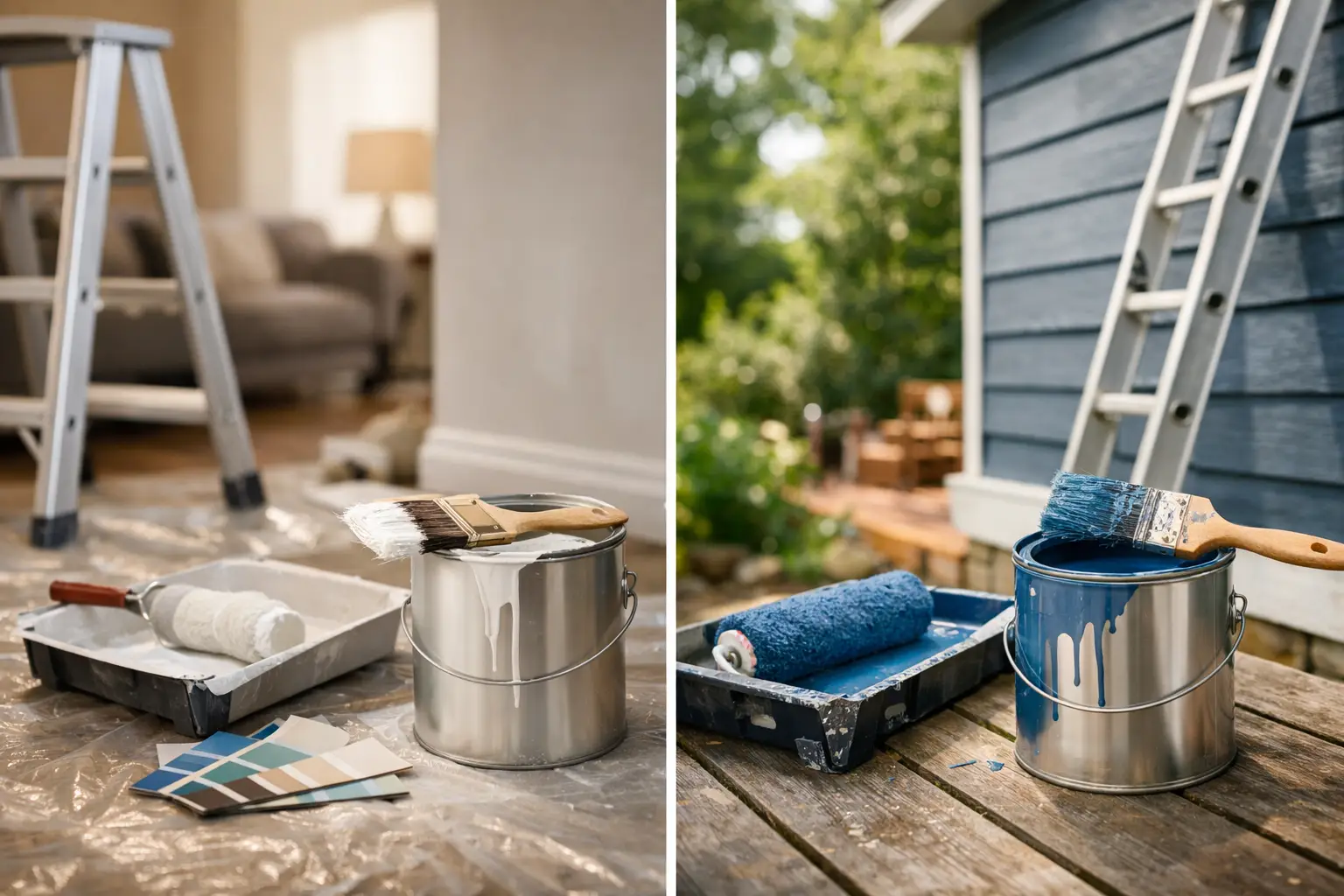
Standing in the paint aisle with two cans that look similar but are built for very different jobs is where a lot of projects go sideways. Interior paint versus exterior paint is not just a label difference. It affects adhesion, cleanability, color retention, odor, flexibility, and how long your finish holds up before you are repainting sooner than planned.
If you are a homeowner refreshing a bedroom or a contractor pricing out trim, siding, or doors, the question is the same: can one paint do both jobs? Usually, no. The formulas are designed around different environments, and using the wrong one can cost more in labor and materials than choosing correctly the first time.
What makes interior paint versus exterior paint different?
The biggest difference is what the coating has to endure after it dries. Interior paint is made for controlled spaces. It needs to look good under artificial and natural light, resist scuffs, clean up well, and release fewer harsh fumes in enclosed rooms. Exterior paint is made for movement and exposure. It has to handle sun, rain, temperature swings, humidity, mildew, and surface expansion and contraction.
That changes the chemistry. Exterior coatings are formulated with additives and binders that help them stay flexible and resist weather damage. Interior coatings are usually optimized for appearance, washability, and stain resistance. They can be harder in some finishes, which helps on walls and trim indoors, but that same hardness is not what you want on a surface baking in the sun and freezing overnight.
Pigments matter too. Exterior colors need better fade resistance because UV exposure is relentless. A rich dark color that looks perfect on a front door can lose its depth quickly if the product was not made for outdoor use.
Why you should not use interior paint outside
Interior paint may look fine for a short time on a porch ceiling, planter, or exterior trim, but that early success is misleading. Once weather gets involved, problems show up fast. You can see blistering, chalking, peeling, mildew growth, or premature fading, especially on surfaces with direct sun or repeated moisture exposure.
It is not only about rain. Exterior surfaces move. Wood swells and shrinks. Metal heats up and cools down. Masonry holds moisture. Interior paint is generally not built to flex with those conditions. When it loses adhesion, the finish breaks down and prep becomes harder on the repaint.
For trade buyers, this matters even more because callbacks eat margin. A lower upfront cost means very little if a job fails early and labor has to be repeated.
Can you use exterior paint indoors?
Technically, you can apply it, but that does not mean you should. Exterior paint often contains additives meant to resist mold, mildew, and weather exposure. Those ingredients are useful outdoors, but they are not ideal for enclosed living spaces where low odor and indoor air considerations matter more.
Exterior coatings may also cure with a different feel or sheen than you want on interior walls. Some can remain slightly softer or tackier for longer because they are designed for flexibility. On an indoor wall, that can mean a finish that attracts dirt or does not give the crisp, refined look most people expect.
There are occasional edge cases, such as certain ventilated utility areas or very specific specialty products, but for standard residential interiors, the better move is to use interior paint designed for that room and surface.
Interior paint: where it performs best
Interior paint is the right choice for drywall, ceilings, interior masonry, wood trim, cabinets when specified, and many previously painted indoor surfaces. The value is in how it levels, how it looks under room lighting, and how it stands up to everyday wear.
Different spaces call for different performance levels. Flat and matte finishes can hide surface flaws well, which is useful in bedrooms and ceilings. Eggshell and satin are common on living areas because they balance appearance and washability. Kitchens, baths, laundry rooms, hallways, and kids’ spaces often need better moisture and scrub resistance, so the product selection matters as much as the color.
If you are repainting furniture, doors, or trim, this is where specialty interior coatings come in. Not every wall paint should go on every surface. A dependable paint supplier can help match the coating to the substrate so you get proper adhesion and a finish that holds up.
Exterior paint: where it earns its cost
Exterior paint is built for siding, trim, shutters, fences, garage doors, masonry, and other outdoor surfaces exposed to weather. The higher cost per gallon often reflects performance features that matter over time: better UV resistance, moisture defense, mildew protection, and flexibility.
That does not mean one exterior paint fits every exterior surface. Wood, fiber cement, stucco, brick, and metal all behave differently. Some need primers that block tannins or improve grip. Some need breathable coatings to let trapped moisture escape. Others need direct-to-metal protection or rust-inhibiting systems.
This is where product guidance saves money. The right topcoat only works as well as the surface prep and primer under it. If you are coating bare wood, chalky siding, patched masonry, or weathered metal, the prep system matters just as much as the finish coat.
Interior paint versus exterior paint for common project questions
A lot of buying decisions come down to practical situations rather than technical definitions. A covered porch, for example, still counts as an exterior environment. Humidity and seasonal temperature changes are enough to justify an exterior-grade product. A sunroom may feel like an indoor space, but if it gets heavy UV and heat buildup, coating choice deserves extra attention.
For front doors, exterior performance is usually the safer choice, especially on the outside face. For garage interiors, it depends on the substrate and use. Standard finished drywall can often take an interior product, but masonry walls, high-moisture conditions, or surfaces near vehicle traffic may need something more specialized.
Furniture is another area where people try to repurpose leftover wall paint. Sometimes it works for a short decorative result. Often it chips, marks, or sticks because the product was not made for that use. Choosing a furniture or cabinet coating is usually the smarter path.
The role of prep, primer, and finish
Paint selection is only part of performance. Even the best interior or exterior formula will struggle on a dirty, glossy, chalky, damp, or unstable surface. Cleaning, sanding, patching, and priming are what turn a coating from a cosmetic layer into a durable finish.
Primer is especially important when you are moving between very different colors, coating porous repairs, covering stains, or painting a demanding substrate like raw wood, masonry, or metal. It improves adhesion, evens absorption, and helps the topcoat deliver the color and sheen you expect.
Finish matters too. Indoors, sheen affects washability, touch-up, and how imperfections show. Outdoors, sheen can influence dirt pickup, surface appearance, and long-term maintenance. There is no universal best finish – it depends on where the paint is going and what the surface needs to hide or withstand.
How to choose the right product the first time
Start with the location. If the surface is outside or exposed to outdoor conditions, use an exterior coating. If it is inside a conditioned living space, use an interior coating unless the project clearly calls for a specialty product.
Then look at the substrate. Drywall, wood trim, concrete, stucco, brick, metal, and previously painted surfaces all have different requirements. Next, think about wear. A guest room wall and a busy commercial corridor do not need the same finish. Finally, think about the end result you want – easy cleaning, mildew resistance, smooth leveling, fast recoat times, or long-term weather protection.
For both DIY customers and pros, buying from a supplier that can help with primer, finish, tools, and color matching makes the process faster and more reliable. Oui Color Paint supports projects from quick room updates to full exterior repaints with the same practical goal: use the right system, avoid avoidable failures, and get a finish worth the labor behind it.
When you are deciding between two cans that seem close enough, assume they are not. Paint works best when the formula matches the environment, and that one choice is often what separates a finish that simply looks good on day one from one that still performs when the season changes.
