


Interior Paint Color Consultation That Works

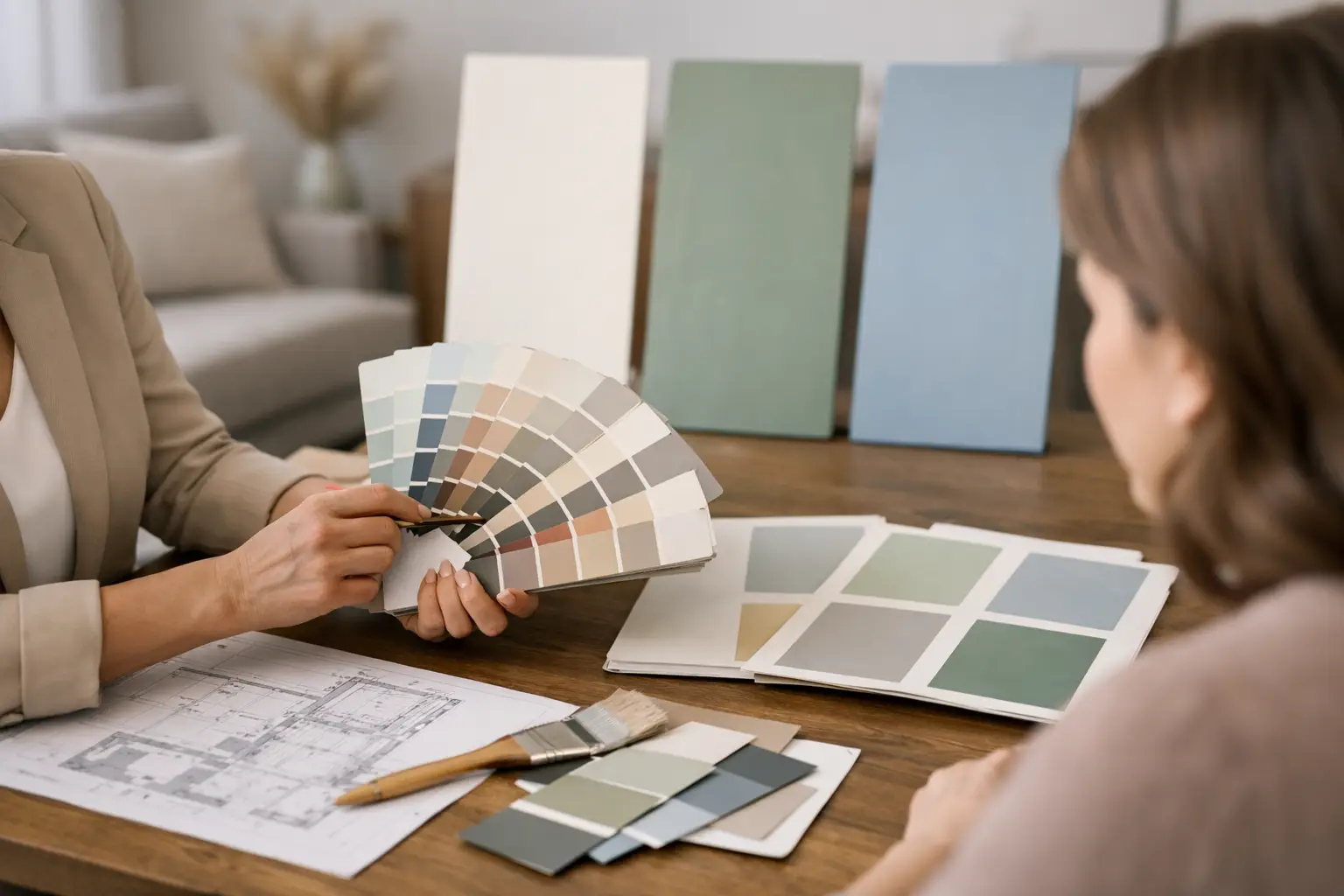
A paint chip that looked perfect under store lighting can turn flat, muddy, or far too bright once it hits your walls. That is exactly why an interior paint color consultation saves time, money, and second-guessing before the first gallon is opened.
Choosing interior color is not just about finding a shade you like. It is about how that color behaves in morning light, under warm bulbs at night, next to wood flooring, beside tile, and across open sightlines. For homeowners, that usually means avoiding expensive repaints. For pros, it means fewer client revisions and smoother project approvals. In both cases, good color planning protects the finish work that comes after.
What an interior paint color consultation actually solves
Most people start with the wrong question. They ask, “What color should I paint this room?” A better question is, “What do I need this room to feel like, and what conditions will affect the color?”
That shift matters because the best color choice depends on more than trend or personal taste. A consultation helps narrow decisions based on fixed elements like flooring, countertops, cabinets, brick, stone, and trim color. It also considers room size, ceiling height, natural light, and whether the space connects visually to hallways, kitchens, or adjacent living areas.
This is where many projects go off track. A gray that works in a bright condo may read blue in a shaded family room. A warm white that looks clean on its own may turn yellow beside cool marble. A bold green can feel rich in a dining room but overwhelming in a narrow hallway. The right consultation catches those issues early.
Why color decisions are harder than they look
Paint is one of the last finishes people choose, but it touches almost every other surface. That makes it deceptively high-stakes. Even a relatively affordable paint project becomes costly when you factor in labor, prep, primer, extra coats, and lost time.
There is also the issue of undertones. Two colors can look nearly identical on a fan deck and behave very differently once scaled up on the wall. Beige may lean pink. White may lean green. Greige may flash violet in shadow. Without a structured review, those undertones are easy to miss until the room is already painted.
Finish selection adds another layer. The same color in flat, eggshell, satin, or semi-gloss will not read exactly the same. Higher sheen reflects more light and can emphasize surface flaws. Lower sheen softens walls but may be less washable in busy areas. A consultation should account for both color and performance, because beautiful paint that does not suit the room is still the wrong product.
What to expect from an interior paint color consultation
A practical interior paint color consultation should do more than hand you three popular whites. It should guide the full decision-making process.
First, the space is evaluated. That includes lighting, room orientation, existing finishes, furniture, and architectural details. North-facing rooms often need different handling than bright south-facing spaces. Open-concept layouts need color continuity, not random room-by-room choices.
Next, the goals are clarified. Some clients want a clean resale-friendly palette. Others want contrast, mood, or better flow between old and newly renovated areas. A homeowner refreshing one bedroom has different priorities than a contractor painting an entire main floor on a deadline.
Then the palette is narrowed. This is where expertise saves real effort. Instead of sorting through hundreds of near-matches, you focus on a smaller group of colors that fit the room, the style, and the lighting conditions. From there, sample testing becomes far more useful because you are comparing good options, not guessing in the dark.
At Oui Colour Paint, that kind of support matters because product choice and color choice go together. A consultation has more value when it leads directly to the right paint, primer, and finishing supplies, rather than leaving customers to piece the project together on their own.
The rooms where color consultation matters most
Any room can benefit from guidance, but a few spaces tend to create the most hesitation.
Kitchens and open-concept living areas
These spaces carry multiple materials at once – cabinetry, counters, backsplash, flooring, appliances, and trim. The paint color has to bridge all of them without fighting any single finish. In open layouts, it also needs to transition well from one function zone to another. A consultation helps prevent disconnected color decisions that make the home feel chopped up.
Bathrooms
Bathrooms are often small, reflective, and highly dependent on artificial light. That combination can make cool colors feel colder and warm colors feel more saturated. If there is tile involved, undertones become even more critical. A clean white that works elsewhere may look harsh against cream tile or brushed brass fixtures.
Bedrooms
Bedrooms are usually less about showing off and more about comfort. That means the right answer depends on the mood you want. Soft neutrals, muted blues, warm off-whites, and grounded greens all work well, but they perform differently based on sunlight, bedding, and flooring. Consultation helps match the atmosphere to the actual room conditions.
Whole-home repaints
This is where consultation often delivers the biggest return. Instead of selecting colors room by room, a full-home approach builds a palette with consistency. You get better flow, cleaner transitions, and fewer surprises when doors are open and sightlines overlap.
How to prepare before your consultation
The process works best when you bring real project information. Start with photos of the space in daylight and at night. Include flooring, trim, cabinets, furniture, and any fixed finishes that are staying. If you have inspiration images, use them carefully. They help communicate style, but they are not a substitute for what your room actually needs.
It also helps to know your project scope. Are you painting one accent wall, a full room, or the entire house? Are ceilings, trim, and doors part of the job? Are you trying to cover a deep existing color? These details affect product recommendations, primer needs, sheen choices, and quantity planning.
Professionals should come prepared with jobsite realities as well. Client preferences matter, but so do timelines, surface conditions, occupancy, and durability requirements. A consultation that ignores those factors may produce a nice-looking color plan that is inefficient to execute.
Common mistakes a consultation can help you avoid
The most common mistake is choosing under retail lighting and skipping large-format samples. Paint has to be tested where it will live. Another frequent issue is matching color to a single object while ignoring the full room. A sofa might work with the wall color, but the floor and trim may not.
People also underestimate transition spaces. Hallways, stairwells, and connecting rooms can throw off the whole scheme if they are treated as afterthoughts. Then there is finish mismatch. Using the same sheen everywhere may seem simpler, but it rarely delivers the best result across walls, trim, baths, and high-traffic areas.
Finally, many buyers focus only on the topcoat. In reality, coverage, adhesion, stain blocking, and final appearance all depend on proper prep and the right primer when needed. Color consultation should support the complete painting system, not just the swatch.
Why this matters for both homeowners and pros
For DIY customers, confidence is the biggest gain. You buy fewer test pots, avoid costly course corrections, and move into the painting phase with a plan that makes sense. That is especially valuable when ordering online or coordinating multiple products for one project.
For trade professionals, efficiency is the real advantage. Better color approvals reduce delays. Better coordination across primers, finishes, and accessories keeps crews moving. When the supplier understands both color and product performance, the job gets easier to price, stage, and complete.
That balance of style guidance and job-ready support is what makes consultation worth using. It is not an extra step that slows the project down. It is often the step that keeps the project on track.
A good color choice should still look right after the samples are gone, the furniture is back in place, and the room is being used every day. If you want that kind of result, start with the room itself, trust the testing process, and get advice that is built for the way the space actually lives.
