


Can You Paint Laminate Cabinets? Yes

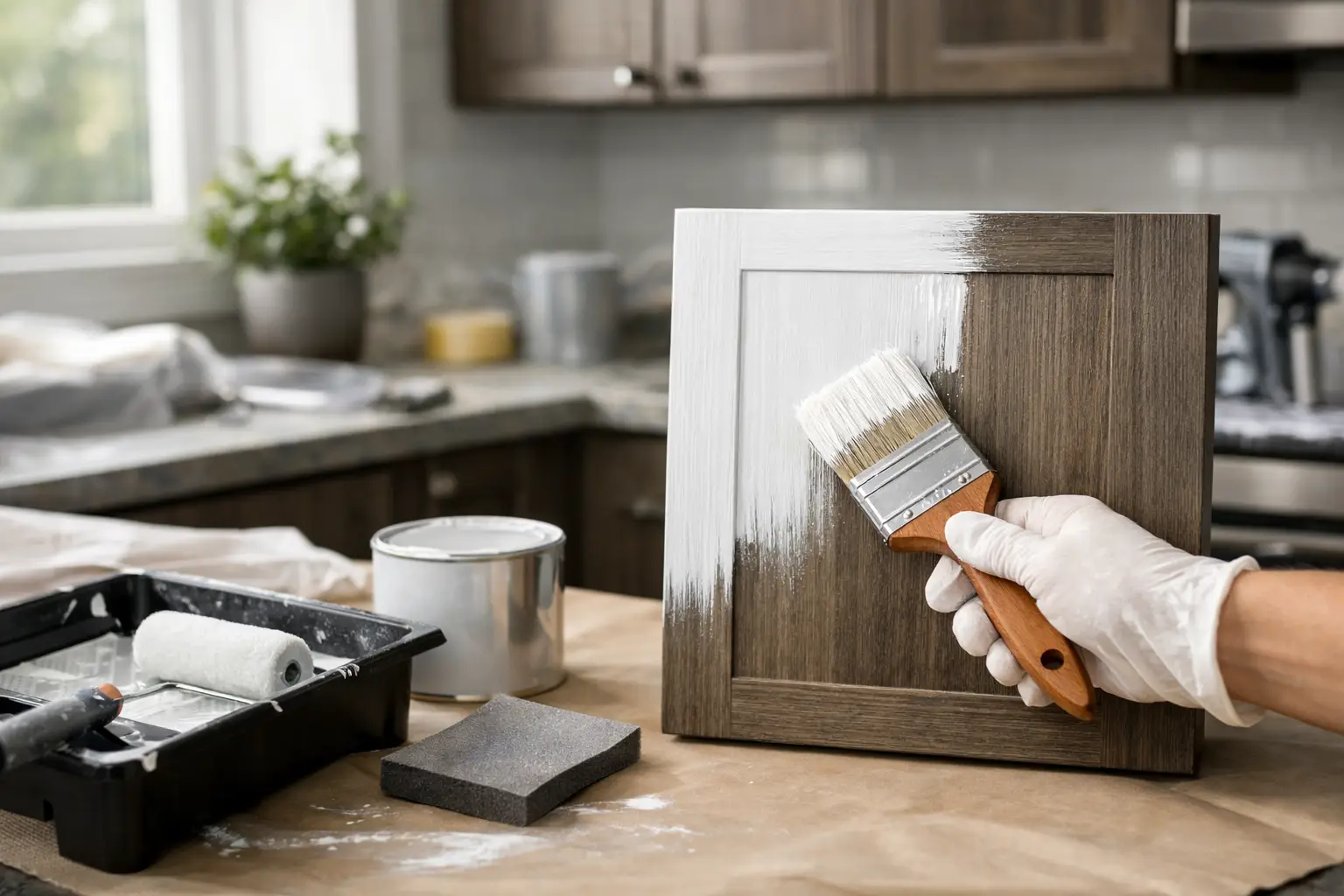
If your kitchen cabinets are laminate, the question usually comes up right after you price out replacement – can you paint laminate cabinets and actually get a finish that lasts? The short answer is yes, but laminate is less forgiving than wood. If you skip surface prep or use the wrong primer, the paint may look fine for a week and then start chipping around edges, pulls, and high-touch areas.
That is why this project is not really about brushing on a new color. It is about building adhesion. When done properly, painted laminate cabinets can look clean, current, and surprisingly durable. When rushed, they tend to show every shortcut.
Can You Paint Laminate Cabinets Successfully?
Yes, you can. The better question is whether your specific cabinets are good candidates for paint.
Laminate cabinets have a thin synthetic surface over a core material, often MDF or particleboard. Paint does not grip that slick top layer the way it grips raw wood, so the entire job depends on getting the surface clean, dulling the sheen, and applying a primer designed to bond to difficult surfaces.
Condition matters. Cabinets with minor wear, fading, or dated color are usually worth painting. Cabinets with peeling laminate, swollen corners, water damage, or failing edges are a different story. Paint cannot fix a substrate that is already breaking down. In those cases, you may spend time and material only to get a temporary improvement.
For homeowners, painting makes sense when the cabinet boxes and doors are structurally sound and you want a lower-cost refresh. For contractors, it can be a practical upgrade on budget-conscious remodels where replacement is not in scope. Either way, success comes from process, not luck.
What Makes Laminate Cabinets Tricky to Paint?
Laminate is smooth, non-porous, and often factory-finished to resist stains and wear. That is great in a kitchen. It is less great when you want a new coating to stick.
Grease is the first problem. Even cabinets that look clean can carry cooking residue, hand oils, and polish buildup, especially around doors near the range and on lower cabinets. Primer will not bond properly over contamination.
The second issue is gloss. A shiny laminate surface gives paint very little to hold onto. You do not need to sand aggressively enough to cut through the laminate, but you do need to scuff the finish thoroughly.
The third issue is expectation. Many people assume cabinet paint will behave like wall paint. It will not. Cabinets take more handling, more impact, and more cleaning. That means every layer – prep, primer, and topcoat – has to be chosen with durability in mind.
How to Paint Laminate Cabinets the Right Way
Start by removing doors, drawer fronts, knobs, and pulls. Label everything so reassembly is quick and accurate. This saves time later and helps you produce a cleaner finish.
Clean every surface with a degreasing cleaner. This step is not optional. If there is any residue left behind, the rest of the system is compromised. Rinse if needed and allow the surface to dry fully before moving on.
Next, sand lightly. You are not trying to reshape the cabinet or remove the laminate. The goal is to degloss and create a slight profile for adhesion. A fine grit usually works well. Be especially careful on edges and corners, where laminate can be thinner and easier to damage.
After sanding, remove all dust completely. A vacuum and a clean, lint-free cloth help here. Any leftover powder can interfere with primer bond and leave texture in the finish.
Then apply a high-adhesion primer rated for slick or hard-to-paint surfaces. This is the step that makes or breaks the project. Standard drywall primer or a leftover multipurpose primer is not the same thing. On laminate, you want a product made to grip challenging substrates and support a cabinet-grade topcoat.
Once the primer has cured according to label directions, inspect the surface. If you see rough spots, raised fibers at damaged areas, or minor imperfections, sand lightly and clean again before painting.
Finish with a durable cabinet paint or trim enamel. Two thin coats generally perform better than one heavy coat. Thick coats are slower to cure and more likely to show brush marks, drips, or soft spots. If you are spraying, you can get a very smooth result, but brush and roller application can also work well with the right tools and technique.
The Best Paint System for Laminate Cabinets
The best system is not just about the paint color. It is about compatibility between cleaner, primer, and topcoat.
For laminate, a bonding primer is usually the non-negotiable piece. It helps bridge the gap between a slick manufactured surface and the finish coat you want to apply. After that, use a hard-drying enamel or cabinet coating designed for trim, doors, and cabinetry rather than a basic interior wall paint.
This is where product selection matters. Homeowners often want an easier application and smooth finish with less trial and error. Trade professionals may prioritize faster recoat times, predictable leveling, and repeatable performance across multiple jobs. Both need reliability. Buying from a paint supplier that can match the system to the surface saves time, especially when you need the primer, topcoat, tools, and prep materials in one order.
Color choice also affects the result. Dark colors can look sharp and modern, but they tend to show fingerprints, chips, and surface flaws more readily. Whites and light neutrals brighten a space, though they may show stains near handles and lower drawers sooner. Mid-tones often give the most forgiving finish in active kitchens.
Common Mistakes That Cause Peeling
Most laminate cabinet failures trace back to one of a few avoidable problems.
Poor cleaning is near the top of the list. Kitchens leave behind more grease than people realize, and even a small amount can weaken adhesion. Skipping sanding or using too fine a touch can also cause problems, especially on glossy laminate.
Using the wrong primer is another major issue. If the primer is not built for slick surfaces, the topcoat is only as strong as that weak bond underneath. Painting over damaged laminate is equally risky. If the laminate is lifting, bubbling, or broken at the corners, paint may hide it briefly but will not stabilize it.
Rushing cure time causes trouble too. Dry to the touch is not the same as fully cured. Cabinet doors need time before they are rehung, closed repeatedly, or cleaned. That matters in busy homes and on contractor schedules alike.
When Painting Is Worth It – and When It Is Not
Painting laminate cabinets is worth it when the layout works, the cabinet structure is solid, and you want a visible upgrade without a full replacement budget. It is especially effective in kitchens, laundry rooms, rentals, and resale prep where the goal is a cleaner, more current look.
It may not be worth it if the cabinets are low-quality and already failing, if the laminate is peeling across multiple doors, or if moisture damage has swollen the core. In that case, even an excellent coating system may only buy limited time.
There is also the labor question. For a DIY project, painting can save substantial money, but it does take patience and space to work. For professionals, the labor can still pencil out well, though only if the scope is priced correctly and drying conditions are controlled.
How Long Will Painted Laminate Cabinets Last?
With proper prep and a quality system, painted laminate cabinets can hold up well for years. The exact timeline depends on usage, cleaning habits, humidity, and how well the original laminate is bonded.
A guest bath vanity will usually have an easier life than a heavily used family kitchen. Lower cabinets around sinks, trash pullouts, and cooking zones take the most abuse. If durability is your main concern, focus your prep effort there and avoid bargain coatings that stay soft.
The finish will also age better if you let it cure fully, use gentle cleaners, and add felt bumpers where doors make repeated contact.
If you are asking can you paint laminate cabinets, the real answer is yes – if you treat it like a surface-adhesion project instead of a quick color change. Good prep, a true bonding primer, and a cabinet-grade topcoat are what turn laminate from risky to paintable. If you want the job to look better and last longer, start with the right system and give each step the time it needs.
