


Stain vs Varnish Wood: Which Finish Fits?

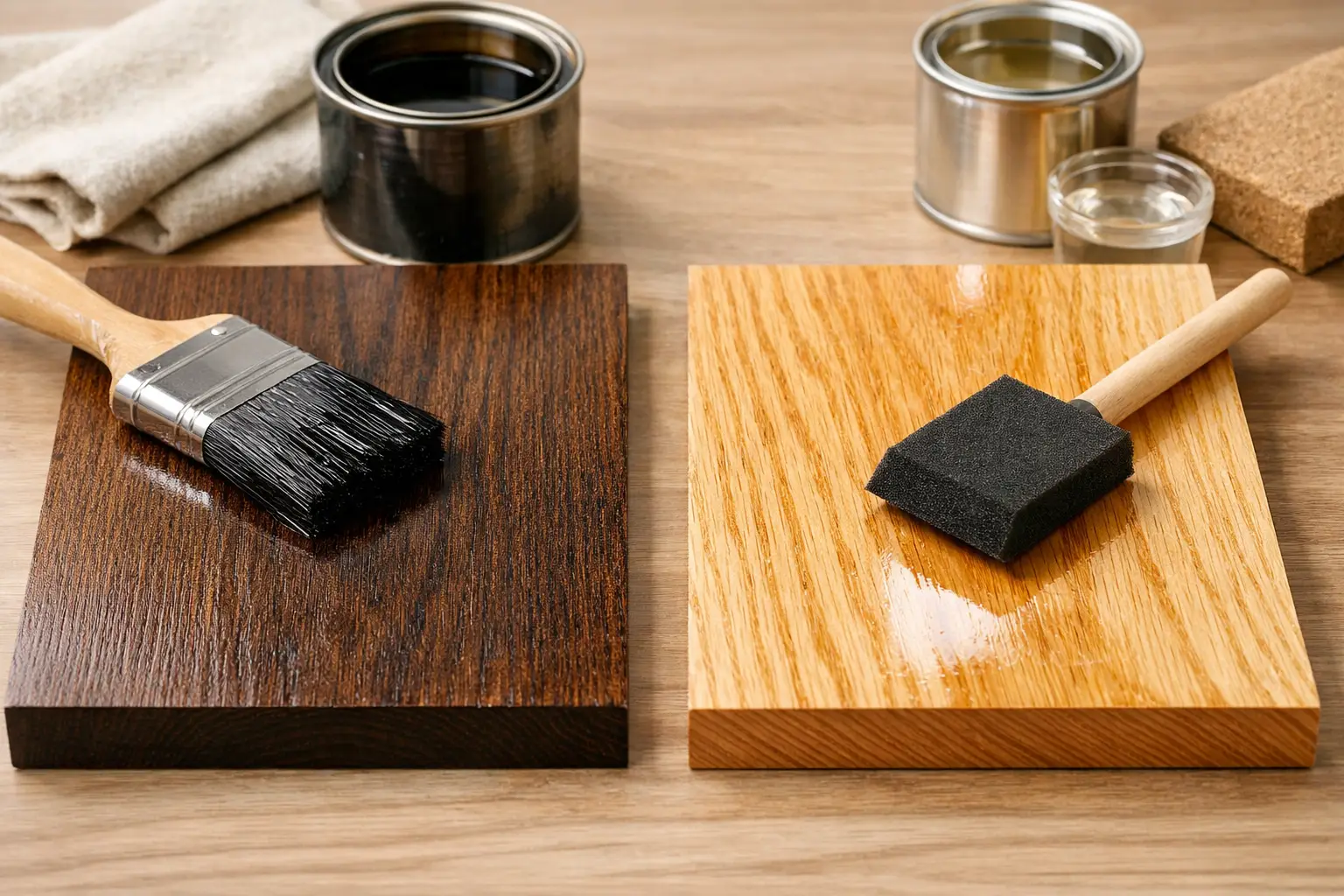
A dining table can look beautifully refinished after a coat of stain, then pick up water rings within a week. The stain vs varnish wood decision matters because these products do different jobs: one changes the wood’s appearance, while the other helps protect it from daily use. Choosing the right finish begins with knowing whether your project needs color, protection, or both.
For homeowners, that may mean bringing an oak dresser closer to a modern walnut tone without hiding its grain. For painters, renovators, and furniture refinishers, it means specifying a finish system that holds up to the room, traffic level, and client expectations. The right product can improve the look of the wood, but proper prep and application are what make that result last.
Stain vs Varnish Wood: The Essential Difference
Wood stain is primarily a colorant. It penetrates or settles into wood fibers to enhance, deepen, or change the natural tone. Transparent and semi-transparent stains still allow the grain pattern to show through, which is why they are popular for furniture, trim, decks, doors, and cabinetry.
Varnish is primarily a protective clear coating. It forms a film over the surface, helping shield the wood from moisture, light wear, scratches, and household spills. Depending on the formula, varnish can dry in a gloss, satin, semi-gloss, or matte sheen.
That distinction sounds simple, but it affects every part of the project. A stained tabletop may have the color you want, yet stain alone is usually not enough protection for a surface exposed to dishes, wet glasses, cleaning, and regular handling. A clear varnish applied to pale raw wood may provide protection, but it will not create the rich, even color change a stain can deliver.
In many interior projects, the best answer is not stain or varnish. It is stain followed by a compatible clear protective topcoat.
When Wood Stain Is the Better Choice
Choose stain when the main goal is changing or enriching the color while preserving visible wood grain. It is a practical option when natural wood looks washed out, has mismatched boards, or needs to coordinate with existing flooring, cabinetry, or furniture.
Oil-based stains are valued for their longer working time and rich penetration. That open time can help on large surfaces such as doors or tabletops, although it also means longer drying times and solvent cleanup. Water-based stains dry faster, produce lower odor, and are easier to clean up with soap and water. They can be a smart fit for indoor DIY projects where speed and cleanup matter, but fast drying can make lap marks more likely if application is uneven.
Gel stains deserve special consideration for vertical surfaces, dense woods, and some previously finished pieces. Because they sit closer to the surface rather than soaking deeply into the grain, they can offer more control on doors, fiberglass, and woods that tend to stain unevenly.
Stain is not a repair product. It will not hide deep scratches, water damage, filler patches, or blotchy sanding. In fact, stain often makes those flaws more visible. If the wood has repairs or major color inconsistency, a paint-grade finish or a more opaque stain system may be the better recommendation.
Understand wood species before selecting a color
Open-grain woods such as oak and ash generally accept stain well and show strong grain contrast. Maple, pine, birch, and cherry can absorb stain unevenly, resulting in dark spots or blotches. On these species, sanding carefully and applying a pre-stain wood conditioner can make the final color more consistent.
Always test the full finish system on an offcut or hidden area. The same stain can look dramatically different on red oak, white oak, pine, and maple. It can also shift once a clear topcoat is added, especially if that topcoat has an amber tone.
When Varnish Is the Better Choice
Choose varnish when the wood already has a color you like and needs a durable clear layer. It is especially useful for tabletops, interior doors, handrails, window trim, wood counters not intended for food preparation, and furniture that receives regular use.
Traditional oil-based varnish typically adds warmth and a slightly amber cast, which can be attractive on oak, walnut, cherry, and darker stained woods. Water-based clear finishes usually stay clearer over light-colored woods and are often preferred when you want to minimize yellowing over pale maple, birch, or whitewashed finishes.
For exterior projects, use a product specifically labeled for exterior exposure. Outdoor varnishes are formulated to better handle moisture movement and UV exposure, but no clear exterior coating is maintenance-free. Sun, snow, rain, and temperature swings eventually wear down the finish. Plan to inspect exterior doors, furniture, and woodwork seasonally and recoat before the protective film fails.
Varnish is not always the right topcoat for every situation. Floors need a coating designed for floor traffic. Kitchen cabinets benefit from finishes selected for repeated cleaning and abrasion. Deck boards generally need a penetrating exterior stain or deck coating rather than a thick clear varnish film, which can crack or peel as boards expand and contract.
Can You Apply Varnish Over Stain?
Yes, provided the stain is fully dry and the products are compatible. This is one of the most reliable ways to finish furniture and decorative interior woodwork: stain establishes the color, and varnish or another clear topcoat provides protection.
Dry time is the point where projects often go wrong. A stain can feel dry on the surface while still releasing solvents underneath. Applying a clear coat too early can lead to poor adhesion, slow curing, wrinkling, or a finish that stays soft. Follow the label’s recoat window, but also account for temperature, humidity, ventilation, and how heavily the stain was applied.
If you are combining brands or product types, test first. An oil-based stain followed by an oil-based varnish is a familiar pairing, while many water-based clear coats can also be applied over a properly cured oil stain. The key is full cure and a clean surface. When in doubt, test the exact stain, topcoat, applicator, and number of coats on a sample board before touching the finished piece.
Application Steps That Protect the Final Result
The finish begins before the can is opened. Sand raw wood evenly, usually progressing through grits rather than jumping straight to a very fine abrasive. For many furniture projects, sanding to 150 or 180 grit gives stain enough texture to absorb while still leaving the surface smooth. Sanding too finely can reduce absorption, particularly with penetrating stains.
Remove every trace of sanding dust using a vacuum and a clean lint-free cloth. Dust left in corners, pores, and edges can create roughness or specks in the clear coat. Avoid using a tack cloth with a heavy residue unless the finish manufacturer specifically recommends it.
Apply stain in manageable sections, keep a wet edge, and wipe excess consistently. More stain left on the surface does not always mean a better result. It can create uneven color and interfere with topcoat adhesion. Let it dry completely, then lightly sand only if the product instructions call for it.
For varnish, thin, even coats are usually better than one heavy coat. Use a high-quality brush, foam applicator, or suitable spray equipment based on the product. Keep the work area clean, maintain a wet edge, and resist the urge to overbrush as the coating starts to set. Between coats, lightly sand if required, remove dust, and apply the next coat within the recommended recoat time.
Plan for curing, not just drying. A piece may be safe to handle in hours but still need days or longer before it can withstand heavy use. Keep newly finished furniture away from water, rubber pads, stacked objects, and aggressive cleaning until the coating reaches its recommended cure time.
Choose the Finish for the Job, Not the Label
A bedroom dresser, a busy family dining table, a front door, and a backyard bench may all be wood, but they do not need the same finish. Start with the appearance you want, then match the coating to the wear and exposure the surface will face. A clear, low-amber finish may suit pale contemporary furniture; a warm oil-based system may better complement traditional trim; an exterior-rated stain is the practical choice for wood exposed to weather.
For a reliable project from prep through final coat, Oui Colour Paint can help you select stain colors, compatible clear finishes, primers, abrasives, brushes, and application supplies in one place. Bring in a sample, photos, or details about the wood species and intended use. A well-matched finish system gives the wood a look worth protecting – and protection worth living with.
