


Blog
Choosing Mildew Resistant Exterior Paint

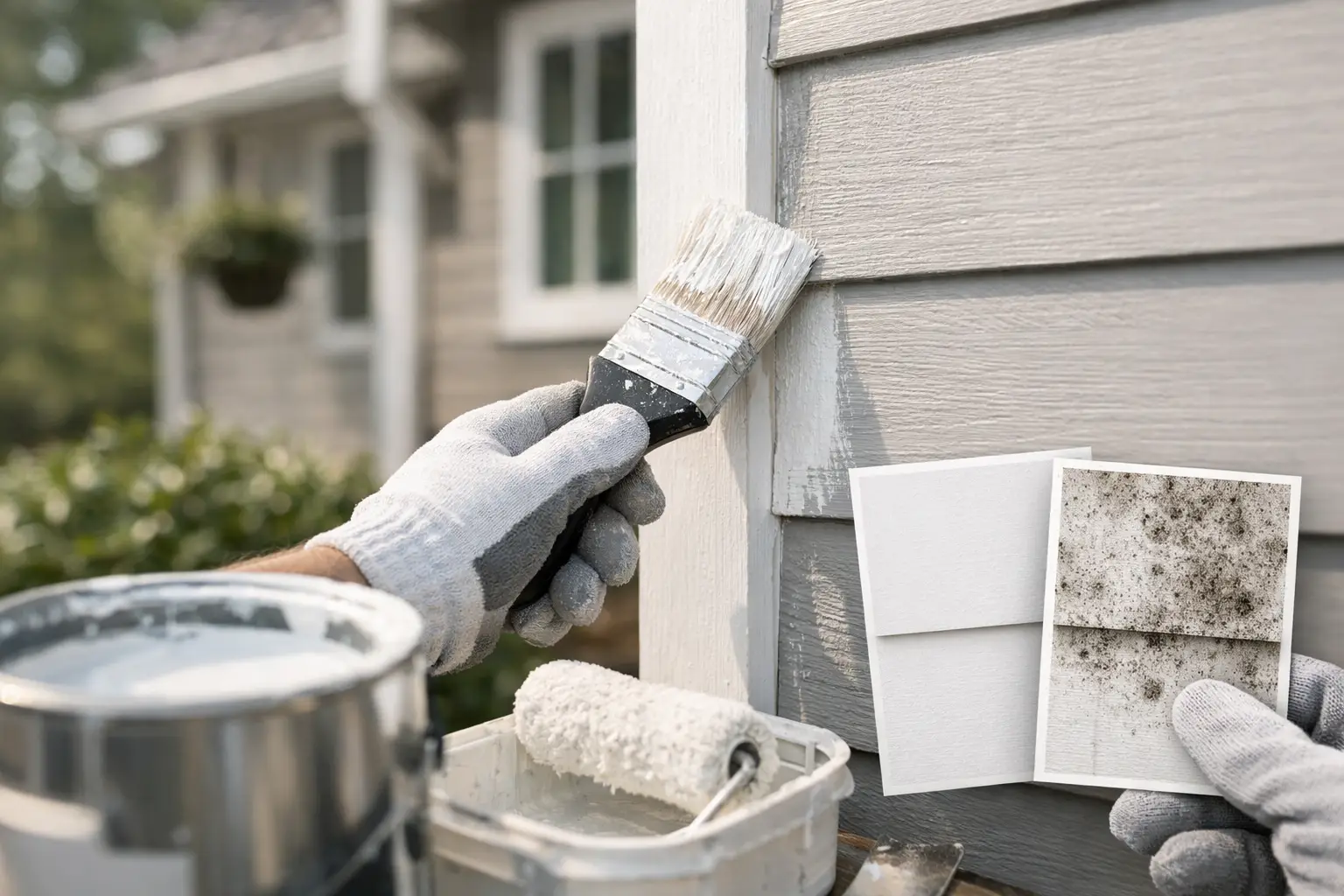
A paint job can look flawless in spring and start showing dark specks by late summer if moisture keeps hanging around the surface. That is exactly where mildew resistant exterior paint earns its keep. If you are painting siding, trim, stucco, brick, or other exposed surfaces, the right coating can slow mildew growth, protect curb appeal, and help you avoid repainting sooner than expected.
Not every outdoor paint labeled for durability performs the same way in damp, shaded, or high-humidity conditions. Homeowners usually want a finish that stays clean and keeps its color. Trade buyers usually want that too, but they also need predictable coverage, solid adhesion, and fewer callbacks. The best choice depends on the substrate, the local climate, how much direct sun the surface gets, and how well the area is prepped before the first coat goes on.
What mildew resistant exterior paint actually does
Mildew resistant exterior paint is formulated with additives that help resist mildew growth on the paint film. That matters because mildew is not just a cosmetic issue. On exterior surfaces, it can leave black, gray, or greenish staining that makes a newer paint job look aged fast, especially on north-facing walls, under eaves, around gutters, and near landscaping that holds moisture.
What this paint does not do is fix the source of the problem. If a wall stays wet because of poor drainage, leaky downspouts, dense shrubbery, or failed caulking, mildew can still return. The coating gives you a stronger line of defense, but moisture management and surface prep are what make that defense last.
That distinction is worth keeping in mind when comparing products. A premium exterior coating with mildew resistance can outperform a lower-grade option, but neither will compensate for painting over contamination, chalky residue, or active mildew that was never cleaned properly.
Where mildew resistance matters most
Some exteriors need this feature more than others. If a home gets strong sun and plenty of airflow, mildew pressure is often lower. If the property sits in a humid area, is close to trees, or has shaded elevations that stay damp after rain, mildew resistance moves from nice to have to necessary.
Wood siding, engineered wood, fiber cement, stucco, brick, and trim can all benefit from mildew-resistant formulas, but the risk level changes by material and location. Masonry can trap moisture differently than wood. Trim boards often get less airflow than large wall areas. Porch ceilings, soffits, and garage surrounds are common problem spots because they tend to collect humidity without drying quickly.
For contractors, these are the surfaces that deserve a closer conversation before ordering materials. For DIY customers, they are the places to inspect before choosing sheen, primer, and topcoat.
How to choose mildew resistant exterior paint
Start with the substrate. A paint that performs well on siding may not be the best choice for masonry or previously coated metal details. Look for a product designed for the specific surface you are covering, then check whether it includes mildew-resistant properties in the cured film.
Next, look at finish. Flat and low-luster finishes can work well on broad siding surfaces where you want to soften imperfections, but they may hold dirt a bit more easily than higher-sheen products. Satin and soft gloss are common choices for trim because they clean more easily and stand up well to weather exposure. There is no universal best finish. It depends on appearance, maintenance expectations, and substrate condition.
Climate should also shape the decision. In wet or coastal environments, resistance to moisture and mildew matters as much as color retention. In hot, sunny regions, UV durability may carry more weight. Many premium exterior paints balance both, but some product lines are stronger in one area than another.
Finally, consider the full system, not just the topcoat. Primer, caulk, patching products, and application tools all affect the result. A dependable supplier can help match the coating system to the project so you are not guessing your way through compatibility.
Prep matters more than most people think
The fastest way to shorten the life of an exterior paint job is to paint over mildew, dirt, or loose material. Even the best mildew resistant exterior paint needs a sound, clean surface to bond correctly.
If mildew is already visible, clean it first with the right exterior surface cleaner or mildew-removal solution, following label directions and local safety guidance. Rinsing matters. Letting the surface dry fully matters too. Paint applied over lingering moisture often fails early, and the failure may look like blistering, peeling, or uneven sheen.
After cleaning, scrape loose paint, feather rough edges, sand glossy spots if needed, and repair damaged areas. Prime bare wood, patched sections, porous masonry, or any surface where the topcoat manufacturer recommends a primer. Spot-priming may be enough in some cases. On weathered or heavily repaired areas, a full prime coat is often the safer call.
This is one of those areas where cutting corners costs more than it saves. A few extra prep hours are cheaper than a repaint.
Application mistakes that can invite mildew back
Even a strong coating can underperform if it is applied in the wrong conditions. Exterior paint should go on within the manufacturer’s recommended temperature and humidity range. If the surface is too hot, the paint can dry too fast and affect leveling. If it is too cold or too damp, curing slows down, which can hurt adhesion and film formation.
Coverage also matters. Spreading paint too thin in an effort to stretch the gallon can reduce protection. So can skipping the recommended second coat. On mildew-prone elevations, full film build is not optional if you want the product to perform the way it was designed.
Watch landscaping too. Bushes pressed tightly against siding reduce airflow and keep surfaces damp. Fresh paint helps, but if the wall never gets a chance to dry, mildew pressure stays high.
Mildew resistance versus mold resistance
These terms are often used interchangeably in casual conversation, but they are not exactly the same. Exterior paint products commonly refer to mildew resistance because mildew is a frequent surface-level problem on painted exteriors. Mold can be broader and more serious, especially when it involves structural moisture issues.
If the problem is limited to staining on the paint film, a mildew-resistant coating may be the right upgrade once the surface is cleaned and dried. If there is deeper moisture intrusion, rotted substrate, or recurring biological growth coming through joints and cracks, the project needs repair work before repainting. Paint is part of the solution, not the whole solution.
When paying more makes sense
Budget matters, especially on large exteriors and commercial work, but cheaper paint can be expensive if it means more labor, weaker hiding, or shorter repaint cycles. A higher-quality exterior coating with mildew resistance often delivers better coverage, stronger adhesion, and more stable color over time.
That does not mean every project needs the top product in the category. A detached garage in a dry climate may not need the same level of performance as a shaded lakeside property or a multi-unit renovation with maintenance expectations attached. The smart approach is to match the coating to the risk level and the expected service life.
For pros, that decision affects labor margins and client satisfaction. For homeowners, it affects how long the project still looks fresh after the ladders are gone.
Getting the right system from the start
Exterior painting goes more smoothly when the products are selected as a system instead of pieced together one item at a time. That means checking substrate needs, choosing the right primer, matching the topcoat to exposure conditions, and making sure you have the prep and application tools to do the job right.
That is also where working with a paint supplier that supports both DIY and trade buyers can save time. If you need help comparing finishes, estimating quantities, matching color, or sourcing primers, caulk, brushes, rollers, tape, and other jobsite essentials in one order, the process gets simpler. Oui Colour Paint serves that kind of project planning with product depth and practical guidance built around real-world results.
A cleaner-looking exterior usually starts long before the final coat goes on. Choose the right paint, respect the prep, and give moisture fewer places to win.
